
SCIENCE BEFORE COMMITMENT: A Public Statement by Science Communicators Philippines on Pax Silica7/30/2026 Science Communicators Philippines recognizes the potential of Pax Silica to bring much-needed advanced manufacturing, semiconductor development, artificial intelligence, and international scientific cooperation opportunities into the country.
If properly planned and governed, the proposed Pax Silica industrial hub in New Clark City stands to generate quality jobs, strengthen Philippine research and industry, retain Filipino scientific and engineering talent, and help the country move beyond exporting raw materials and performing lower-value work. Yet, though we are not opposed to technology, industrialization, or international cooperation, we cannot endorse Pax Silica while its essential terms remain undisclosed. Our position and recommendation for the country is unequivocal: No terms, no commitment. The project is being presented as a major economic opportunity, with government estimates of as much as US$70 billion in investment and up to 190,000 direct jobs in semiconductor manufacturing, critical-mineral processing, artificial intelligence infrastructure, energy systems, logistics, research facilities, and related industries. These projections are continually being touted without supporting data. But a project of this scale cannot be judged on promises alone. The final agreement, confirmed investors, detailed site plan, environmental studies, water and energy plans, community-impact assessments, and many of the project’s legal and financial terms have not been made public—if these have been drafted or even considered at all. Before the Philippine government signs anything, it must first undertake an independent, science-based assessment of not only individual facilities but also the combined effects of manufacturing, mineral processing, data centers, power facilities, water systems, roads, ports, housing, land conversion, waste disposal, and related infrastructure. This assessment must examine the full life cycle of the materials and technologies involved, from mineral extraction and transport to manufacturing, export, use, recycling, and disposal. Its methods, assumptions, data, and models must be disclosed and reviewed by independent experts from the academe, related industries, civil society, and the government. Scientific assessment must shape the agreement; it cannot be treated as post-agreement paperwork. General assurances are not enough. Government estimates indicate that the completed hub may require around three gigawatts of power and 65 million to 90 million liters of water every day. The public must know where these resources will come from and whether the project could raise electricity costs, strain the national grid, reduce water available to households and farms, or damage surrounding ecosystems. The proposed use of rainwater, surface water, recycling systems, and dedicated treatment facilities must be tested against actual rainfall, drought, El Niño, climate change, agricultural demand, household consumption, and ecological needs. The government must also disclose how industrial wastewater, hazardous chemicals, emissions, and waste from semiconductor and mineral-processing activities will be managed. Farmers, Indigenous Peoples, workers, residents, local governments, businesses, environmental groups, and other affected sectors must also be involved before the agreement is finalized. Consultation must not consist of presenting a completed plan and asking communities to accept it. People must be able to examine the evidence, raise objections, recommend alternatives, and influence the final terms. Any Pax Silica agreement must remain fully subject to Philippine law, jurisdiction, environmental regulation, labor standards, taxation, public-health rules, data-protection laws, and national security policies. The government must disclose the lease terms, tax and investment incentives, public spending commitments, ownership arrangements, dispute-resolution provisions, cybersecurity rules, environmental liabilities, foreign personnel arrangements, and any restrictions involving defense or dual-use technologies. No foreign government, office, investor, or project locator should receive authority outside Philippine law or protection from future regulations intended to defend public health, workers, communities, the environment, and national security. The project must also create lasting Filipino capability. Its success cannot be measured only by capital inflows, export values, or headline job numbers. The government must explain how many jobs will be permanent, how many will go to Filipinos, what skills they will require, how much they will pay, and what protections workers will receive. Any agreement must contain measurable commitments on Filipino employment, local procurement, technology transfer, scholarships, apprenticeships, research funding, university partnerships, supplier development, and Filipino participation in technical and leadership positions. The Philippines must not remain merely a source of raw minerals, inexpensive labor, land, water, and energy while research, intellectual property, strategic control, and most of the long-term value remain abroad. The full agreement and its essential legal and financial terms must therefore be disclosed before the government proceeds. Independent environmental, social, climate, health, energy, water, and life-cycle assessments must be published and reviewed. Affected communities must participate meaningfully. Binding commitments on Filipino jobs, research, technology transfer, and local economic value must be established. Independent monitoring must continue throughout the project’s lifetime. Pax Silica may yet become an important opportunity for the Philippines, but left unchecked it may also leave irreversible costs and obligations that could last for generations. Indeed, the greater the promise that Pax Silica proclaims, all the greater is our duty to examine the evidence before committing the country’s land, water, energy, minerals, public funds, communities, and technological future. Evidence, transparency, environmental protection, and public participation are non-negotiable. Until the complete terms are disclosed and independently examined, our position remains: Philippine sovereignty must be protected. No terms, no commitment.
0 Comments
By Chris Lacdao-Umali, Ateneo Institute of Sustainability 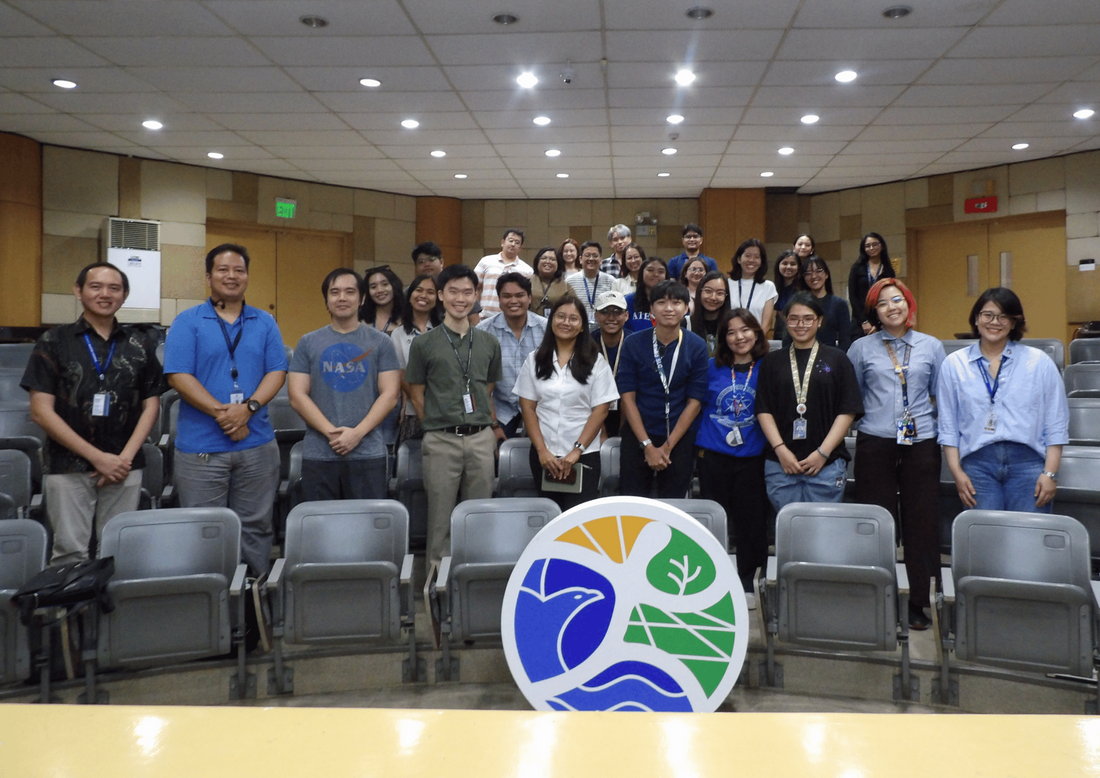 At the heart of effective science communication is the most intrinsic, human pastime of telling stories. And like all captivating stories, its role is to meet audiences where they are, to make the narrative – the knowledge passed on – accessible and relevant without losing meaning.
Organized by the Ateneo Institute of Sustainability (AIS), the Office of the Assistant Vice President for Research, Creative Work, and Innovation (OAVP–RCWI), and Science Communicators Philippines (SciCommPH), the Science Communication Workshop was held on 08 April 2026. Its goal was simple: To equip participants with the practical science communication skills that will help engage various audiences, as well as to explore further interdisciplinary collaboration in order to create more meaningful impact. All these were brought to life by two experts in the field, Mr TJ Dimacali and Mr Mikael Francisco. Going from study to story The movement from scientific research and data to engaging and accessible content means laymanizing and developing a story worth paying attention to. In his session on basic science communication writing, Mr Dimacali, Research Communications Head of OAVP-RCWI and Vice President for External Affairs of SciCommPH, describes it as to “start from the very raw – then look at these and figure out ano ba ang kwento?” He emphasizes that the role of the science communicator is to serve as a bridge, as one who brings the topics to a place where audiences can understand best. It can be as simple as finding familiar connections, relating to pop culture – any angle that might pique interest for audiences to keep reading. As with any form of writing, Mr. Dimacali talked about the merits of building a clear structure: A reliable arc, a captivating hook, and supporting details to satisfy piqued curiosities. He also noted that while new information is exciting, writers need to be mindful that, “Journalism does not begin or end with one story,” riding on the truth that brevity is often key in engagement, and that a foot in the door of wonder — or, learning, or curiosity – is a great entry point. Easily, one story can lead to many more, as curiosities become more constant. A plethora of platforms In his session entitled, “the Scicomm [e]cosystem: Science Communication via Digital Media”, Mr. Francisco, Co-Founder and Editor-in-Chief of FlipScience, took participants through a myriad of examples of science communication on various media – across platforms such as Youtube, podcasts, and social media spaces. Through these, participants understood more deeply the unique facets of each platform, and how each one lends itself to ways to connect, engage, and build on knowledge. Effective science communication then is not just finding the best words or best angle to frame a story, but also choosing the best form in which a story is told to an audience. Working on the wording The afternoon ended with an actual workshop exercise, in which the facilitators and participants read through and gave feedback on submitted works from anonymous members of the group present. Mr. Dimacali and Mr. Francisco helped participants navigate through the experience of “holding the editor’s pen” in critiquing and offering suggestions for the texts in question. The takeaway of the three-hour workshop? People love to know – crave curiosity, create curiosity, and celebrate curiosity. 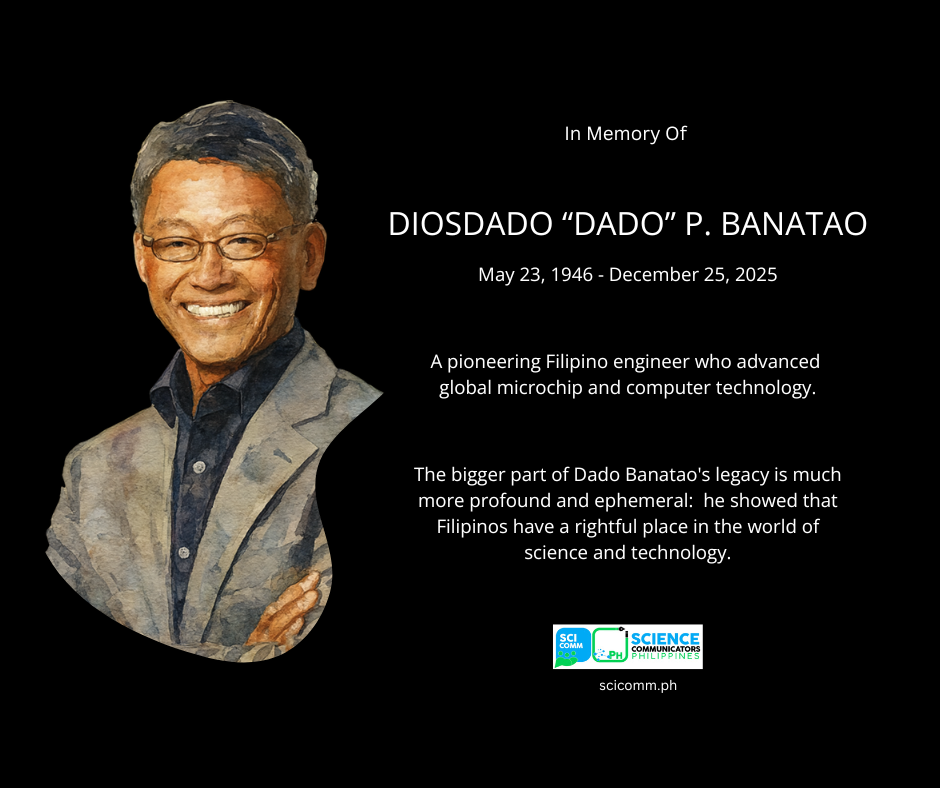 Science Communicators Philippines extends its deepest condolences to the bereaved family and loved ones of the late Engr. Diosdado “Dado” P. Banatao.
Much has already been said about his foundational contributions to computer design and infrastructure. Indeed, true to his farmer’s roots, he helped plant the seeds of the information economy we know today. But the bigger part of his legacy is much more profound and ephemeral: he showed that Filipinos have a rightful place in the world of science and technology. What SciCommPH strives to do with words and visuals, Dado Banatao did far more eloquently and effectively with his hands: not just making science for the people, but making it with and about the people. It is said that great men are forged in fire, leaving lesser men to light the flames. But Dado Banatao showed another way: he taught us that hard work, coupled with humility and compassion for kapwa, uplifts us all. Like the tide that raises all boats, we Filipinos together have the power to bring forth a better world for everyone. Ultimately, Dado Banatao’s legacy is not written in silicon and code, but in the hearts of everyone his life has touched and empowered. His greatest contribution is the inspirational knowledge that science and technology can and should be a part of Filipinos’ everyday lives—and that Filipinos, through science and technology, are worthy contributors to the growth of shared human knowledge for the good of all humanity. Maraming, maraming salamat po. Jinji Quiambao, Newsbytes.ph 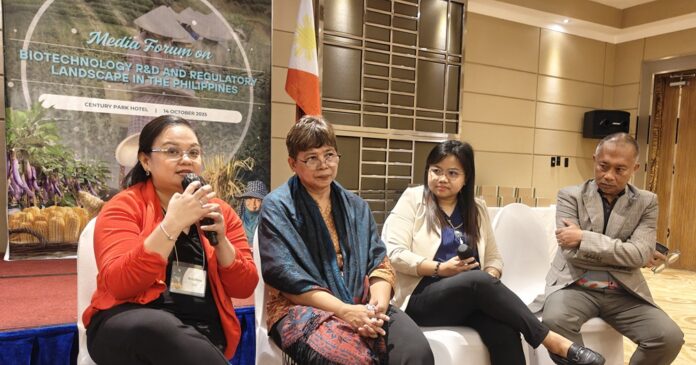 Photo shows (from left) Kristine Tome; program officer II at ISAAA; Dr. Lourdes Taylo, Bt Eggplant program head at IPB UPLB; Dr. Clarrise Gonzalvo, assistant professor 7 at CDC UPLB; and Joy Bartolome Duldulao, branch director for healthier rice program co-lead at PhilRice As climate change and food insecurity continue to challenge the nation’s agricultural productivity, Filipino scientists are turning to biotechnology (BT) as a key solution for sustainable farming and nutrition. At a media forum on “Biotechnology R&D and Regulatory Landscape in the Philippines” held on October 14, experts from leading scientific institutions reported significant advances in gene-edited and genetically engineered crops— innovations poised to reshape the country’s food systems. The International Service for the Acquisition of Agri-biotech Applications Inc. (ISAAA) noted a growing global and local acceptance of gene-edited crops, driven by more science-based regulations. These crops — engineered for higher yield, pest resistance, and improved nutrition — are seen as vital in addressing malnutrition and climate-related farming losses. The Philippine Rice Research Institute (PhilRice) has shifted its research priorities from merely increasing yield to improving eating quality and nutritional value. One example is Golden Rice, a genetically engineered variety enriched with Vitamin A to combat micronutrient deficiency among Filipino children. At the University of the Philippines Los Baños (UPLB), researchers from the Institute of Plant Breeding (IPB) continue to advance Bt eggplant and Bt corn, crops modified for resistance to major pests such as the fruit and shoot borer and corn borer. These biotech varieties reduce the need for chemical pesticides, lowering farming costs and environmental risks. Despite these scientific milestones, experts warn that regulatory hurdles remain a bottleneck. Legal challenges, including environmental cases such as Writ of Kalikasan petitions, have delayed commercialization and farmer access to biotech crops. “The science is ready, but the system must keep up,” said Dr. Winifredo Dagli of UPLB’s Department of Science Communication. “We need stronger science communication and policy alignment to make biotechnology truly work for the people.” A UPLB study also underscored the need for science education and public engagement to dispel misinformation and build trust in biotechnology. Experts urged the government and private sector to share success stories from other countries and make scientific concepts more understandable to farmers and consumers alike. Forum participants — including PhilRice, UPLB, the Department of Agriculture’s Bureau of Plant Industry, the National Academy of Science and Technology (NAST), and the International Rice Research Institute (IRRI) — agreed on promoting “coexistence” among traditional, organic, and biotech farming systems. This approach, they said, empowers farmers to choose technologies that best fit their needs while preserving environmental integrity and cultural practices. Organized by Science Communicators Philippines (SciCommPH), CropLife Philippines, and SEARCA, the event forms part of the National Biotechnology Week celebration, highlighting the Philippines’ growing momentum toward technology-driven, climate-smart agriculture. This article was republished with permission from Newsbytes.ph
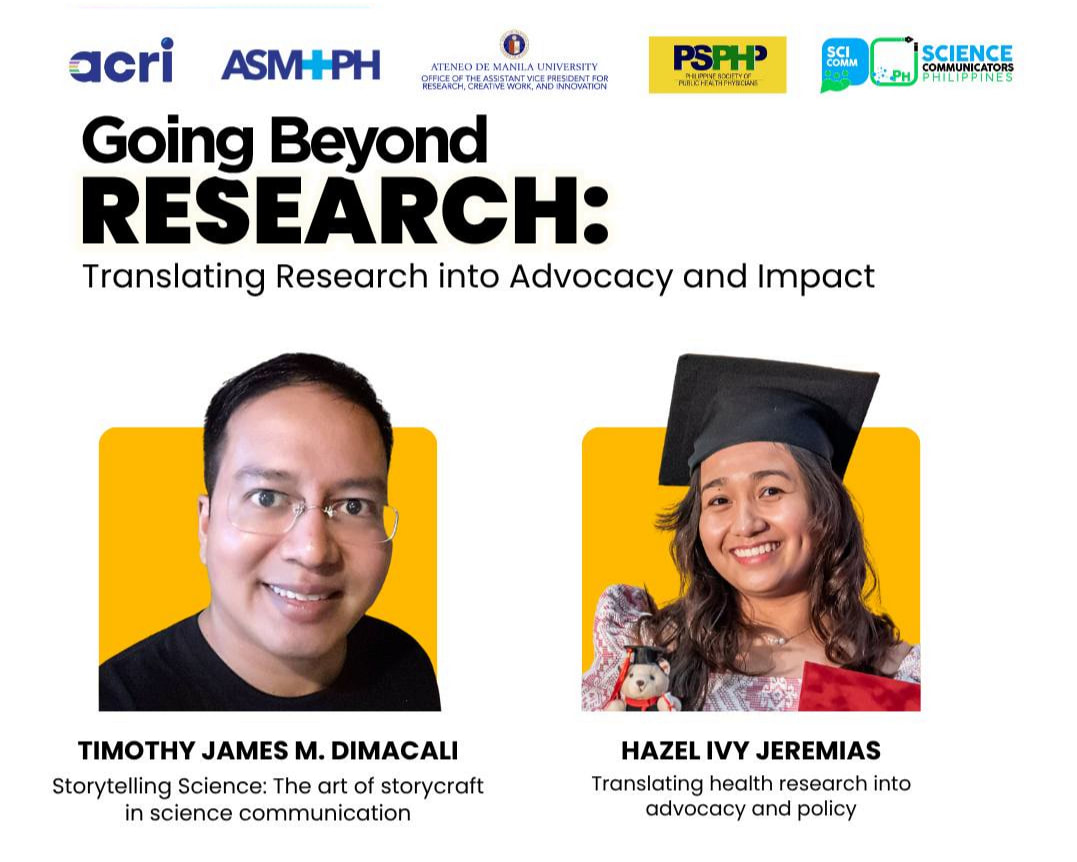 Science Communicators Philippines (SciCommPH) recently joined the Ateneo de Manila University in underscoring the value of research in service of society through the webinar “Going Beyond Research: Translating Research into Advocacy,” which gathered Ateneo faculty, researchers, and communicators from diverse disciplines to explore how scientific knowledge can be better shared, understood, and applied for the public good.
Held last October 8, the event was jointly organized by the Ateneo School of Medicine and Public Health (ASMPH) and its Center for Research and Innovation (ACRI); the Office of the Associate Vice President for Research, Creative Work, and Innovation (OAVP-RCWI); the Philippine Society for Public Health Physicians; and SciCommPH. It forms part of the Ateneo’s and SciCommPH's continuing efforts to build a society that values science as a means of both discovery and dialogue towards informed decision-making. In her opening remarks, ACRI Director Dr. Lourdes Bernadette Sumpaico-Tanchanco welcomed participants by emphasizing that research attains its true value only when it resonates with people’s lives. She urged scholars to “bridge the gap between discovery and lived experience,” stressing that storytelling, advocacy, and collaboration are not peripheral to research but essential to its purpose. “As researchers and scholars, our responsibility goes beyond publication and data,” she said. “It is to ensure that our findings empower communities, inform policy, and inspire action.” Opening the afternoon was Timothy James Dimacali of the OAVP-RCWI and SciCommPH with his presentation, “Storytelling Science: The Art of Storycraft in Science Communication.” Drawing from his experience as a journalist and science communicator, Dimacali explained that storytelling is not a distraction from research but a vital part of it. “People care about people,” he said. “If we can show the human story behind data, we help others see why science matters.” He demonstrated how narratives anchored on empathy and curiosity make complex ideas relatable in fields as diverse as medical research, environmental change, and technological innovation. Hazel Ivy Jeremias of the ASMPH followed with “Translating Health Research into Advocacy and Policy.” She discussed the process of bridging academic work with government and community initiatives, emphasizing that advocacy grounded in evidence can transform public health systems. Jeremias encouraged fellow researchers to “go beyond publication” by sharing findings through partnerships, accessible language, and sustained engagement with stakeholders. Both talks highlighted the value of science communication in medicine and beyond: it is equally essential in fields such as climate science, engineering, the social sciences, and the humanities—areas where data and policy intersect with everyday life. The speakers noted that effective communication helps prevent misinformation, fosters informed citizenship, and ensures that academic research fulfills its social mission of bringing light to the world. In his closing remarks, Dr. Filomeno V. Aguilar Jr. of the OAVP-RCWI lauded ACRI and ASMPH for exemplifying this ideal. “You bring medical science to the people,” he said, “and in doing so, you bring Ateneo’s light to the nation.” He reminded the audience that research finds its true value only when it enlightens minds and uplifts lives. “Science communication,” Dr. Aguilar stressed, “is a civic duty. It builds trust, fosters understanding, and turns knowledge into compassion.” Moderated by Dr. Theo Prudencio Juhani Z. Capeding of the ASMPH, the webinar was capped with a call to strengthen collaboration across disciplines so that the university’s research may continue to illuminate society. In this spirit, he exhorted the participants to go beyond research so as to make every discovery a shared act of service for others. 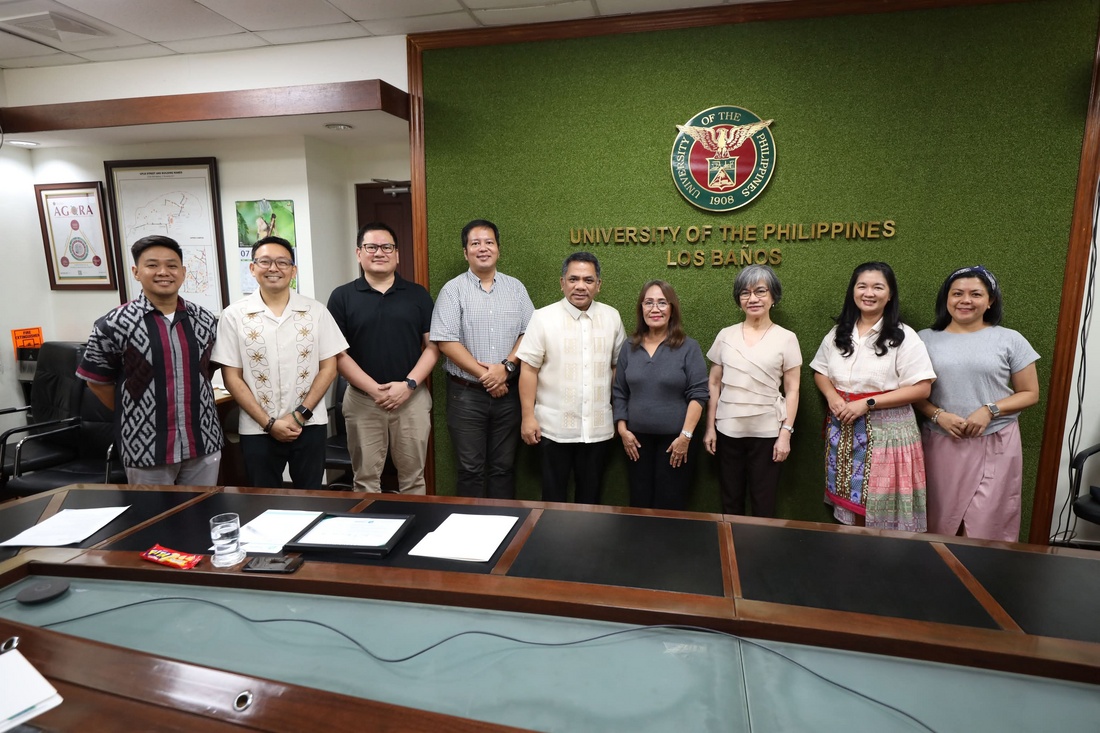 SciCommPH swore in a new Board of Trustees for 2025, ushering in new initiatives and collaborations towards bolstering public science engagement in the Philippines. UP Los Baños Chancellor Jose V. Camacho Jr. (center), accompanied by SciCommPH Executive Director Izel Gonzales (rightmost), administered the oath in his office to the new incoming officers (L-R) Mark Lester Del Mundo Chico, Trustee At-Large; Dr. Jomar F. Rabajante, Auditor; Dr. Rogel Mari Sese, Vice President for Internal Affairs; Timothy James M. Dimacali, Vice President for External Affairs; Dr. Ruby R. Cristobal, President; Angelina B. Resurreccion, Secretary; and Dr. Aimee Lynn B. Dupo, Treasurer. PHOTO: UP Los Baños Ahead of the UNESCO-declared International Day for Universal Access to Information and the simultaneous celebration of World News Day on September 28, Science Communicators Philippines (SciCommPH) is renewing its push for nationwide public participation in science with a new Board of Trustees.
The new Board was sworn in at the University of the Philippines Los Baños (UPLB) Chancellor’s Office—an apt venue, considering the institution’s esteemed and well-established Development Communications and Science Journalism faculty—with UPLB Chancellor Jose V. Camacho Jr. himself administering the oath. “We are storytellers, translators, and advocates for scientific truth and innovation,” said SciCommPH Chair Angelo B. Palmones in a prepared statement, noting the group’s diverse and inclusive network of scientists, communicators, and journalists. “In a world increasingly reliant on evidence-based decisions, our role has never been more crucial. SciCommPH was founded on the belief that scientific knowledge, when effectively communicated, empowers communities, informs policy, and inspires progress,” Palmones concluded. Since its inception in 2023, SciCommPH has focused on capacitating media practitioners—journalists, researchers, content creators, students, and government staff—on science communication, journalism, digital communication, and ethics. The organization has also partnered with scientific, educational, and media institutions to mount public fora, provide speakers and media space, support interviews, and incentivize outstanding student work. The new Board of Trustees includes: Angelo B. Palmones (Chairman); Dr. Ruby R. Cristobal (President); Dr. Rogel Mari Sese (VP for Internal Affairs); Timothy James M. Dimacali (VP for External Affairs); Angelina B. Resurreccion (Secretary); Dr. Aimee Lynn B. Dupo (Treasurer); Dr. Jomar F. Rabajante (Auditor); Melvin G. Calimag and Mark Lester Del Mundo Chico (Trustees, at-large); and Maria Eliza P. Gonzales (Executive Director). SciCommPH thanked UPLB leadership and the College of Development Communication community for hosting the ceremony, signaling deeper collaboration to “bridge the gap between science and society” through public forums, training, and media partnerships. Author: SciCommPH BoardCourtesy of Nikki Myzah Tumampos
Stephanie Tumapos, a doctoral student in geoscience and remote sensing at Technology University of Munich in Germany, and at Impe-rial College London, said she was “overwhelmed,” “surprised” and “humbled” when she was featured in a book and in two online stories during the celebration of the International Women’s Month last month Tumampos was among the 15 women from different sectors who were featured in the book “Becoming Sheroes: Stories of Heartstrong Women,” and among the scientists in the online “10 Women Shaping the Earth Sciences” and “Who is Who in GRSS.” Author: SciCommPH BoardThe Science Communicators Philippines (SciCommPh) Inc. is now a member of the World Federation of Science Journalists (WESJ).
The WFSJ accepted SciCommPh’s membership application in March 2023 and included SciCommPh in its roster of 71 national science and technology (S&T), environment, health and medical journalists organizations from all over the world. Author: SciCommPH Staff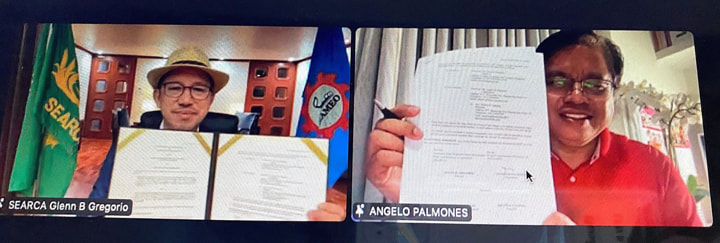 Searca Director Dr. Glenn B. Gregorio (left) and SciCommPh Chairman Angelo B. Palmones sign an MOU to promote science and technology research development and innovations in agriculture.
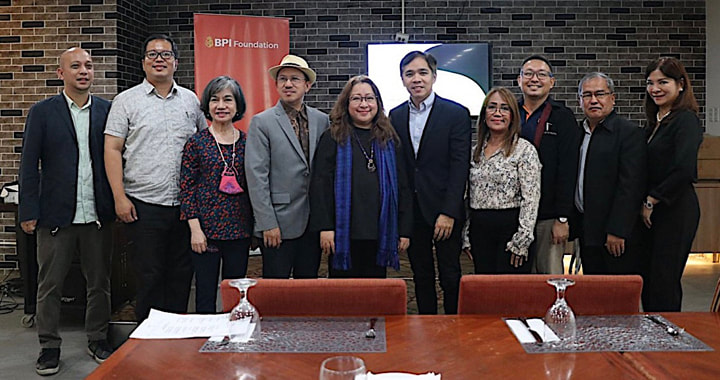 The founding officials of SciCommPh are joined by keynote speaker Searca Director Dr. Glenn B. Gregorio, oath of office administrator DICT Undersecretary Jocelle Batapa-Sigue and BPI Foundation Executive Director Owen Cammayo (fourth, fifth and sixth from left). The SciCommPh officials are (from left) President Atty. Melvin G. Calimag, VP for External Affairs Timothy James M. Dimacali, Secretary Lyn B. Resurreccion, Treasurer Dr. Ruby R. Cristobal, Auditor Dr. Jomar Rabajante, Board Member Dr. Mario V. Capanzana and Executive Director Rissa Silvestre. Not in photo are Chairman Angelo B. Palmones and VP for Internal Affairs Dr. Rogel Mari D. Sese.
|


